

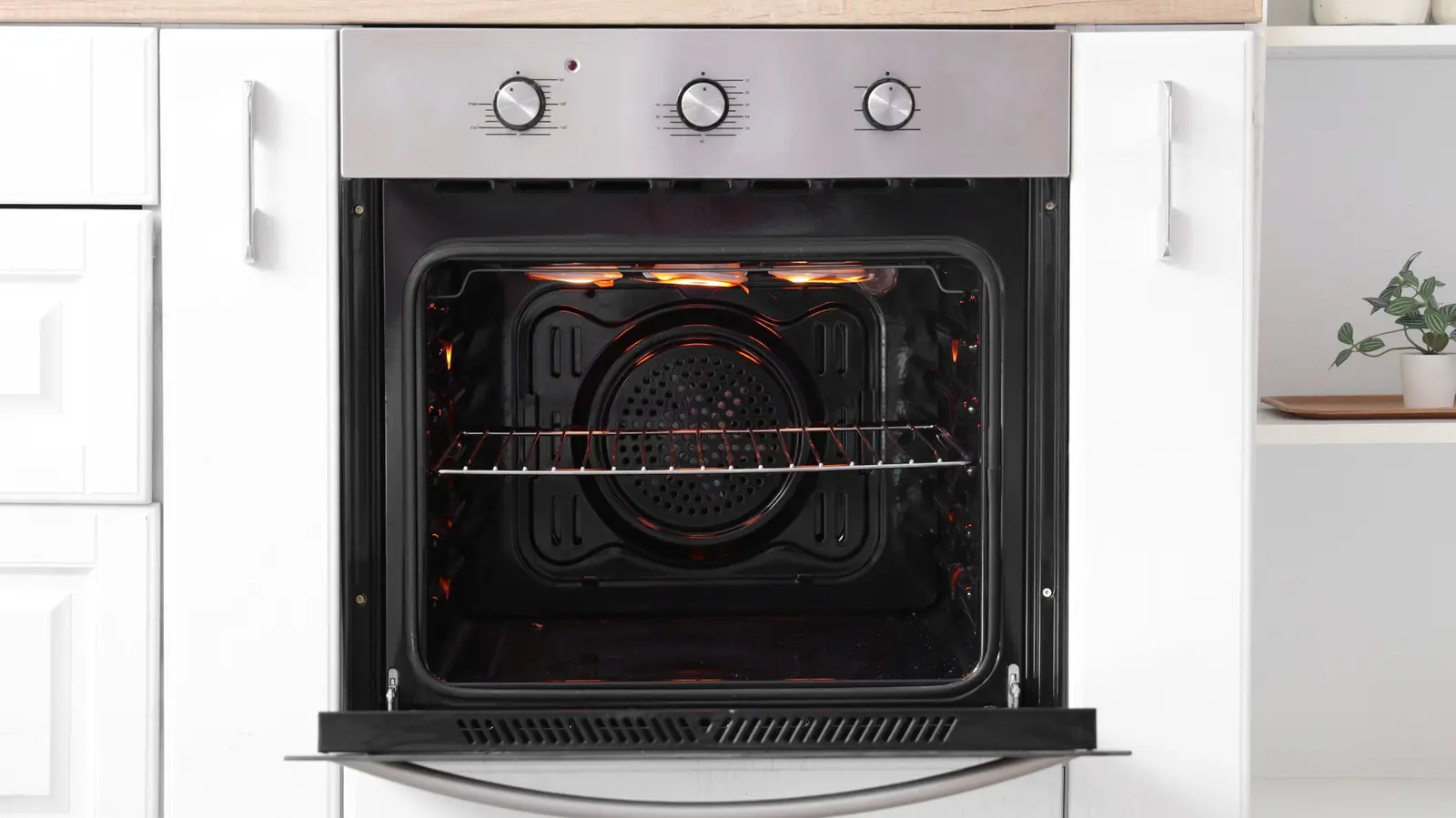
Air fryers have become almost as universal as microwave ovens. This is partly because some models are made to fit your small kitchen, and also because of their capability overall. But with the rise of smart ovens, you might wonder if the air fryer has lost some of its luster. The truth is that while smart ovens are increasing in popularity, air fryers aren't going away anytime soon. Both categories are experiencing steady growth, driven by different consumer needs and technological advancements.
The global air fryer market continues to show strong growth, with Grand View Research estimating its value at $1.28 billion in 2023 and projected to reach $2.07 billion by 2030. Factors like healthier cooking and even social media influence are helping to drive this growth. By contrast, Global Market Insights found that smart ovens held a market value of just over $317 million in 2024. That number is expected to climb toward $918 million by 2034. This growth is driven in part by an increasing demand for smart home appliances with advanced features like multiple cooking modes. This modern approach allows for Wi-Fi connectivity, voice control, and app-based monitoring.
Based solely on the data, the gap between smart ovens and air fryers is still significant. But both categories are showing steady growth. Rather than one device overtaking the other, what emerges is a broader shift toward modern kitchen appliances that overlap in capability and continue to evolve. Consumers are increasingly looking for appliances that offer convenience, efficiency, and versatility—qualities that both air fryers and smart ovens bring to the table.
The overlap between smart ovens and air fryers
Smart ovens and air fryers are linked because smart ovens can perform all the same functions as a regular oven, and some of them have the air fryer feature built in. An air fryer's size generally means it uses less electricity than an oven, but there's the matter of counter space, which some people just don't have. Combining appliances is not just convenient, it also saves room. Many modern smart ovens are designed to replace multiple standalone devices, offering baking, broiling, roasting, air frying, dehydrating, and even proofing functions all in one unit.
In fact, some critics believe the air fryer is indeed a waste of space, arguing that while it can cook faster than a traditional oven, it doesn't always do so consistently. This is especially true for raw proteins like beef and pork, which can either be undercooked or overcooked, depending on the method and timing. There's also the issue of versatility, as air fryers are often better suited to reheating instead of handling more complex recipes. However, air fryer enthusiasts point out that the rapid air circulation technology gives foods a crispy texture with less oil, making it ideal for frozen snacks, french fries, and chicken wings.
But a smart oven's ability to properly air fry foods can vary based on the model. For example, a smart oven from a tech brand like Samsung might be spot-on for air frying in terms of results versus recommended cooking times. Or you might need to adjust the temperature or cook time to compensate. Your cleanup could also vary, since you'd only be washing the pan or container you used in the oven, versus washing the entire air fry basket. Additionally, smart ovens often come with built-in cameras, humidity sensors, and automatic cooking programs that take the guesswork out of meal preparation.
Market trends and consumer preferences
The air fryer phenomenon was ignited by social media platforms like TikTok and Instagram, where creators showcased quick, crispy meals. This viral trend has sustained the market, even as other cooking gadgets emerge. Air fryers are now a fixture in many homes, with penetration rates estimated at over 40 percent in the United States. Their affordability, with basic models starting under $50, makes them accessible to a wide audience. In contrast, smart ovens are generally higher priced, often exceeding $300, which limits their initial adoption.
However, the smart oven market is growing as consumers become more comfortable with connected home technology. The ability to preheat an oven remotely, receive notifications when food is ready, and use voice commands via Amazon Alexa or Google Assistant appeals to tech-savvy users. Moreover, smart ovens often feature larger capacities, allowing users to cook whole meals or multiple dishes at once. This makes them more suitable for families or those who entertain frequently.
Another factor favoring air fryers is their energy efficiency. Because they are smaller and use less electricity, they can be more economical for everyday use. But for those with limited counter space or a desire to streamline their kitchen, a smart oven that replaces a traditional oven, toaster, and air fryer can be a worthwhile investment. Many smart ovens also include convection fan technology that mimics air frying, narrowing the performance gap.
Technological evolution and future outlook
Both product categories are evolving rapidly. Air fryer manufacturers have started adding smart features, such as app-controlled cooking presets and temperature probes. Some high-end air fryers now include Wi-Fi connectivity and compatibility with voice assistants, blurring the line between a traditional air fryer and a smart oven. On the other hand, smart oven brands are continually improving their air fry performance by optimizing fan speed and heating elements.
The future likely holds a convergence of these appliances. We may see hybrid devices that function primarily as a smart oven but with the compact size and rapid cooking capability of an air fryer. Companies like June, Brava, and Tovala have already pioneered smart ovens with multiple cooking modes, and their successors could dominate the market. Meanwhile, air fryer sales are expected to remain strong in developing regions where affordability is key.
Consumer education plays a role in the adoption of smart ovens. Many users are still unfamiliar with the full range of features offered by smart ovens, and the initial learning curve can be a barrier. However, as more recipes and cooking programs become available for these devices, usage should grow. The integration of artificial intelligence and machine learning could further simplify cooking, with ovens that automatically adjust time and temperature based on the food's weight and type.
Practical considerations for buyers
When choosing between an air fryer and a smart oven, potential buyers should evaluate their cooking habits, kitchen size, and budget. If you primarily cook small batches of frozen foods or want a quick way to reheat leftovers, an air fryer is likely sufficient. Its portability also allows you to store it away when not in use. If you enjoy baking, roasting, or experimenting with different recipes, a smart oven provides more flexibility. The ability to control the oven remotely can be a game-changer for busy individuals who want to start dinner on their way home.
Space is another critical factor. A smart oven often requires more countertop room or a dedicated cabinet space, whereas an air fryer can fit into tight gaps. Some smart ovens are designed to be built into cabinetry, mimicking the look of a traditional wall oven. For renters or those in smaller apartments, a standalone air fryer might be more practical. Additionally, energy consumption matters: air fryers use about 1,200 to 1,500 watts, while smart ovens can range from 1,800 to 2,400 watts, but cooking times can offset this difference.
Maintenance and durability also differ. Air fryer baskets and trays are often non-stick, but they can peel over time. Smart ovens require careful cleaning of interior sensors and heating elements. However, many smart ovens have self-cleaning cycles or steam cleaning options that simplify upkeep. Warranty and customer support are important for both, but smart ovens tend to have more complex electronics that may need specialized repairs.
Cultural shift toward modern cooking
The rise of both air fryers and smart ovens reflects a broader cultural shift toward convenience and efficiency in home cooking. With more people working from home and spending time in their kitchens, there is a desire for appliances that save time and reduce effort. Social media continues to influence kitchen trends, with viral recipes driving sales of specific gadgets. The air fryer's initial success was bolstered by its ability to make "fried" foods appear healthy, and smart ovens now leverage similar marketing by promoting their precision and connectivity.
Moreover, sustainability concerns are shaping consumer choices. Energy-efficient appliances that cook food faster and reduce waste are appealing to environmentally conscious buyers. Both air fryers and smart ovens can help reduce cooking times and energy usage compared to a traditional full-size oven. Some smart ovens even have eco-modes that optimize energy consumption.
As technology advances, we can expect even more integration between kitchen appliances and smart home ecosystems. The Google Assistant integration in smart ovens allows users to preheat the oven with voice commands, while Amazon Alexa can check the cooking status. Air fryers are slowly adopting similar features, but the depth of integration varies. In the coming years, the line between air fryers and smart ovens will continue to blur, with many consumers choosing a single multifunctional device over several single-purpose gadgets.
Source: SlashGear News